Table of Contents
CHAPTER 1: The Unthinkable Entrance
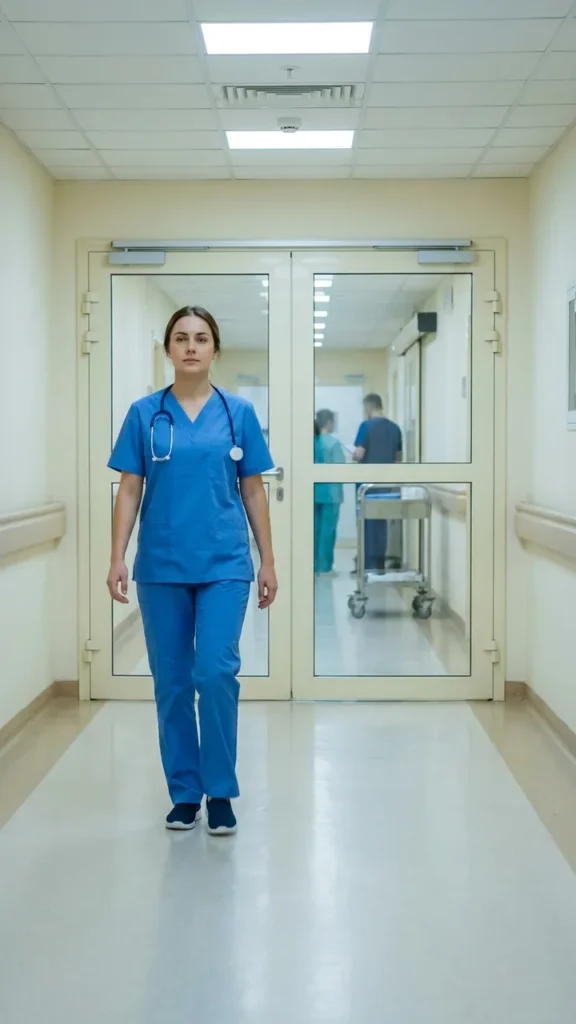
The sterile, fluorescent-lit hospital hallway buzzed with the usual hushed urgency.
A symphony of beeps and soft footsteps.
But the calm was shattered by a terrifying sight.
A Belgian Malinois, a powerful working dog named Buster, entered the scene.
His powerful frame filled the doorway.
He carried a small child.
Firmly in his jaws.
The child, clad in a bright red puffy jacket, was limp.
An unnerving contrast to the dog’s determined stride.
Nurse Sarah saw it unfold.
Her eyes widened.
Shock.
Horror.
She recognized Buster.
A frequent visitor.
Usually a gentle presence.
But this was different.
This was chaos.
Panic erupted.
The waiting area.
A seismic wave of fear.
An elderly woman with a shock of white hair shrieked.
She recoiled.
As if the dog were a phantom.
Others in the room scrambled.
Their faces etched with fear.
Pure, unadulterated terror.
The scene devolved.
A tableau of primal fear.
Then, the officer arrived.
A burly man.
Crisp blue uniform.
Yellow stripe on his pants.
He moved with an aggressive energy.
A predator.
He was armed.
His hand gripped a weapon.
His gaze fixed on Buster.
The air crackled.
Tension.
Electric.
“You bet you’re out of here!” the officer roared.
His voice echoed.
Through the hall.
Sarah knew she had to act.
This was escalating too quickly.
She rushed towards the dog.
Her hands outstretched.
“Stop!
Don’t hit him!” she pleaded.
Her voice strained.
Against the rising tide of panic.
Buster, sensing the aggression, let out a low growl.
His teeth bared.
A clear warning.
The child remained still in his mouth.
A silent passenger.
Sarah reached out.
Her own hands trembling.
Palms facing the dog.
“Buster, easy,” she murmured.
Her voice softer now.
Trying to cut through the fear.
The officer continued his advance.
His movements sharp.
Threatening.
Sarah positioned herself between the dog and the officer.
A fragile shield.
“He’s just trying to protect the child,” she said.
Her eyes met the officer’s. “He’s not a threat.”
The officer paused.
His expression a mixture of confusion and irritation.
The immediate danger seemed to have momentarily subsided.
Replaced by a tense standoff.
Sarah gently reached out.
Placed a hand on Buster’s head.
Stroking his wet fur.
“It’s okay, boy,” she whispered.
Her hand moved to his collar.
Her fingers brushing against a small, silver dog tag.
She read the inscription. “K9 Buster.”
The weight of the situation.
The dog’s identity.
The unexpected turn of events.
Settled heavily upon her.
The raw fear in the waiting room began to subside.
Replaced by a dawning realization.
Something else.
Something complex.
Was at play.
David.
The child’s name.
Was likely a patient.
Buster’s actions, however alarming, stemmed from a protective instinct.
The chaos was just beginning to unravel.
The officer, Sergeant Miller, narrowed his eyes.
His thick beard bristled.
He recognized Sarah.
A good nurse.
But this was an officer’s business.
“Step aside, Nurse,” Miller barked.
His voice was gravelly.
Aggressive. “This is a K9 incident.”
Sarah stood her ground.
Her heart pounded.
A frantic drum against her ribs.
She could feel the tremors in her own hands.
“He’s not attacking,” Sarah insisted.
Her voice was steadier now.
Fueled by adrenaline and a fierce protectiveness. “He found the child.
He’s bringing him to safety.”
Buster whined softly.
A low, guttural sound.
He shifted his weight.
But he did not release his grip on the child.
His eyes remained locked on Miller.
A silent, canine challenge.
The bystanders, no longer screaming, watched with bated breath.
Their faces pale.
Eyes wide.
They were a silent jury.
Witnessing the unfolding drama.
A woman in a floral dress clutched her chest. “Oh, Lord,” she whispered.
Her voice trembling.
Another man, his face etched with concern, leaned forward. “What’s happening?” he asked, his voice barely audible.
Miller took a step forward.
His weapon still held at the ready. “I don’t care what he’s doing,” Miller growled. “He’s got a kid in his mouth.
My job is to neutralize the threat.”
Sarah flinched at the word “neutralize.” “He’s not a threat!” she repeated, louder this time.
She could feel a hot flush creep up her neck. “He’s a K9 unit, Sergeant.
Look at his tag.”
Miller glanced down.
His gaze flickered to the silver tag Sarah had pointed out. “K9 Buster,” he read aloud.
The words seemed to hang in the air.
A moment of hesitation.
But his posture remained rigid.
His authority unyielding.
Suddenly, two hospital security guards appeared.
Uniformed.
Stern-faced.
They moved towards the scene.
Their eyes scanning the room.
“What’s going on here?” one of the guards demanded.
He addressed Miller directly.
His tone respectful, but firm.
“This dog is in possession of a child,” Miller stated, his voice still commanding. “I’m securing the situation.”
The other guard eyed Buster warily.
His hand hovered near his utility belt. “We need to get that child to the ER,” he said.
Sarah seized the opportunity. “Exactly!” she exclaimed. “That’s why I’m trying to stop you from scaring him.
He’s a K9.
He’s trained.
He’s not going to hurt the child.
He’s trying to help.”
Miller scoffed. “Trained to apprehend, Nurse.
Not to play nanny.”
The first security guard stepped closer, his gaze fixed on Buster. “Let’s not make this worse, Sergeant.
The nurse is right.
That dog is acting protective.”
Buster let out a soft rumble in his chest.
Not aggressive, but a clear indication he was still on high alert.
The child remained limp.
Unmoving.
The red jacket a beacon of vulnerability.
Sarah took another tentative step towards Buster.
She spoke softly, her gaze never leaving his. “Buster,” she murmured. “It’s okay, boy.
You did good.
You found him.
Let’s get him help.”
Miller watched, his jaw tight.
He saw the way Sarah interacted with the dog.
The calm confidence.
The lack of fear.
It was an unusual sight.
Most people would be screaming.
Running.
The tension in the hallway had shifted.
The raw, primal fear was slowly being replaced by a complex mix of confusion, suspicion, and a dawning awareness of something beyond a simple animal attack.
The authority of the officer was being subtly challenged by the nurse’s calm reasoning and the visible behavior of the dog.
The story was far from over.
‘Dr. Anya Sharma burst through the double doors of the emergency department.
Her face was a mask of professional urgency, her white coat billowing slightly.
She saw the commotion immediately.
The dog, the child, the officer, the nurse.
Her medical instincts kicked in, overriding any shock.
“What is going on here?” Dr. Sharma demanded, her voice cutting through the tense quiet.
She strode purposefully towards the group, her eyes assessing the situation with a practiced speed.
Sergeant Miller turned, his aggressive posture momentarily faltering as he recognized the head of the ER. “Dr. Sharma.
We have a situation.
This dog… it took a child.”
Sarah seized this moment, her voice urgent. “Doctor, this is K9 Buster.
He found David.
David’s unconscious.
He was trying to bring him to us.”
Dr. Sharma’s gaze snapped to the child.
Her eyes, sharp and perceptive, noted the pallor of his skin, the unnatural stillness. “Unconscious?
Is he breathing okay?” She knelt beside Buster, her movements calm and measured.
Buster, sensing a shift, whined again.
He nudged the child gently with his nose.
His tail gave a tentative, low thump against the linoleum floor.
The aggression in his stance had softened considerably, replaced by a palpable anxiety.
“I don’t know,” Sarah admitted, her throat tight. “He was like this when Buster brought him.”
Miller’s face remained hard, but a flicker of uncertainty crossed his features.
He lowered his weapon slightly, though his grip remained firm. “He’s a K9.
He’s trained to subdue.”
“He’s trained to serve and protect, Sergeant,” Dr. Sharma corrected, her voice firm.
She placed a gloved hand on Buster’s head, her touch gentle. “And right now, he’s doing his job.
He’s bringing a patient to us.” She looked at Buster. “Good boy, Buster.
You did a very good thing.”
Buster licked her hand, a soft sigh escaping him.
He seemed to understand the shift.
The immediate threat had receded.
“He’s still got the kid in his mouth, Doc,” Miller grumbled, though his tone lacked its earlier bite.
His eyes were fixed on the child, his brow furrowed.
“And he’s going to let go when he knows it’s safe,” Dr. Sharma assured him.
She looked directly at Buster. “Buster, can you let go?
Can you let us help David?”
Buster seemed to consider this.
He looked from Dr. Sharma to Sarah, then back to the limp child.
Slowly, deliberately, he opened his jaws.
The child, still in the bright red jacket, eased out.
He didn’t fall; Buster’s muzzle had held him with surprising gentleness.
The child landed softly on the floor.
Dr. Sharma and Sarah immediately moved to his side.
Sarah reached for the child’s wrist, her fingers searching for a pulse.
“Weak, but there,” she reported, a sliver of relief washing over her.
Her hands were no longer trembling uncontrollably.
Dr. Sharma was already checking the child’s airway, her movements efficient. “He’s breathing shallowly.
Pupils are sluggish.” She looked up at Miller. “He’s severely compromised.
Whatever happened, it was serious.”
Miller watched the medical professionals work.
He saw the child’s fragile state.
He saw the dog’s clear distress, his tail now tucked low, his body language conveying concern rather than menace.
He saw Sarah, who had stood her ground against him, her dedication to the child evident.
“He… he just wandered out?” Miller asked, his voice softer now, almost sheepish.
He was piecing it together.
A child in distress.
A dog finding him.
“That’s what it looks like,” Sarah said. “He must have gotten out of his room.
And Buster found him.
Maybe he sensed something was wrong.”
Dr. Sharma nodded, her focus on the child. “We need him in the trauma bay.
Now.” She looked at Buster. “You stay here, Buster.
Good boy.”
The security guards, who had been standing by, looking uncertain, now relaxed their stances.
The immediate crisis, the perceived threat, had passed.
Miller ran a hand over his beard, a gesture of weary contemplation.
He met Sarah’s gaze. “Nurse,” he began, his voice strained. “I… I was out of line.”
Sarah looked at Sergeant Miller.
The adrenaline was fading, leaving her drained but resolute.
She saw the genuine remorse in his eyes. “We all reacted to what we saw, Sergeant,” she said, her voice calm. “It looked terrifying.
But you have to trust your instincts.
And sometimes, those instincts are wrong.”
Miller sighed, a deep, heavy sound. “Yeah.
Too much.
Too fast.” He looked at Buster, who was now lying on the floor, his head resting on his paws, his eyes following the gurney carrying the child away. “He’s a good dog.”
“He is,” Sarah confirmed. “He’s been helping with therapy visits for a while now.
He’s gentle.
He’s intuitive.” She paused, remembering the inscription on the tag. “K9 Buster.”
One of the security guards, a man named Kevin, spoke up. “We recognize him.
He’s usually with Officer Davies.
Police K9 unit.
But he sometimes comes for therapy rounds in pediatrics.
We figured he was on duty.”
“So he’s not just a regular dog,” Miller mused. “He’s trained.
But trained for what?”
“Trained for detection, apprehension, K9 support,” Sarah explained. “But he’s also been integrated with the therapy program.
He has a calm demeanor.
He’s good with children.” She looked at Miller. “He likely sensed David was in trouble.
Children who are sick or disoriented can wander.
He probably saw David, realized he was in distress, and did what he was trained to do: locate and secure.
But his ‘apprehension’ was to bring him to safety, not to harm him.”
Miller nodded slowly. “The child’s parents?
Have they been notified?”
“I’ll have a nurse page them immediately,” Sarah said. “They must be frantic.”
The bystanders, having witnessed the entire exchange, began to murmur amongst themselves.
The fear had dissipated, replaced by curiosity and a shared sense of relief.
The woman in the floral dress approached Sarah hesitantly.
“That was very brave of you, dear,” she said, her voice warm. “You kept your head.”
A elderly gentleman nodded in agreement. “And that dog… who would have thought?”
Miller cleared his throat.
He looked at the bystanders, then back at Sarah. “I made a mistake.
I reacted without thinking.
I apologize, Nurse.
And I apologize to everyone here if I caused undue alarm.” His voice was clear, carrying across the now hushed hallway.
Sarah gave him a small, acknowledging nod. “We all learned something today, Sergeant.
About quick judgments.
About looking deeper.”
The trauma bay doors slid open, and a young doctor poked her head out. “He’s stabilized for now.
We’re running tests.
His parents are on their way.” She saw the assembled group. “What a commotion!”
Dr. Sharma emerged from the trauma bay, wiping her hands.
She addressed Miller and Sarah. “Sergeant, Nurse.
That dog.
Buster.
He’s a hero.
He brought that child to us when he was on the brink.”
Miller’s expression was a mixture of embarrassment and respect. “I’m glad he did, Doctor.
I’m glad he found him.” He looked at Sarah. “Thank you, Nurse.
For… for intervening.
For seeing past the immediate danger.”
Sarah offered a tired smile. “Just doing my job, Sergeant.
And Buster was helping.”
As the crowd began to disperse, the story of K9 Buster and Nurse Sarah’s courage began to spread.
A story of a terrifying moment that morphed into an act of canine heroism and human de-escalation.
The fear in the hospital hallway had been replaced by a quiet awe.
A testament to understanding, quick thinking, and the unexpected ways help can arrive.
The child would recover, the dog would be praised, and the nurse’s actions would be remembered.
The chaos had unraveled, leaving behind a clear, powerful lesson.
CHAPTER 2: Escalating Tensions and a Plea for Understanding
‘Sarah watched Sergeant Miller’s apology hang in the air, a fragile peace settling over the chaotic hallway.
The relieved murmurs of the bystanders felt like a collective exhale.
But the moment was shattered by a sharp, new voice, cutting through the nascent calm.
“What’s going on here?”
It was Captain Eva Rostova, head of hospital security.
She strode in, flanked by two uniformed guards, her expression grim, her eyes scanning the scene with a proprietary glare.
She didn’t miss the lingering tension, the dog, the nurse, the officer.
“Sergeant Miller,” Captain Rostova’s voice was a low, dangerous growl, devoid of any warmth. “Explain this scene.
Now.”
Miller straightened, his earlier remorse hardening slightly under her stern gaze. “Captain.
A dog brought an unconscious child into the ER.
Nurse Sarah here,” he gestured towards her, “intervened.
The dog is K9 Buster.”
Rostova’s eyes narrowed, settling on Buster, who was now curled protectively near where the child had been. “A K9?
In a civilian area?
Unattended?
That’s a serious breach, Sergeant.
And you,” she pointed a finger at Sarah, “you were interfering with law enforcement.
What were you thinking?”
Sarah stepped forward, her voice firm, though a tremor ran through her hands. “Captain, Buster wasn’t unattended.
He was bringing David to us.
He found David unconscious.
He was trying to help.”
“Help?” Rostova scoffed, her lips curling into a disbelieving sneer. “He had a child in his mouth.
That’s not ‘help,’ Nurse.
That’s an uncontrolled animal posing a threat.
And you,” she turned back to Miller, “should have secured the animal immediately.
Instead, you’re having a ‘moment’ with the nurse.”
One of the security guards, a burly man named Jenkins, moved closer to Buster, his hand inching towards his sidearm.
Buster let out a low, warning growl, his ears pricked.
“No!
Don’t,” Sarah pleaded, stepping between Buster and Jenkins. “He’s agitated, but he’s not aggressive.
He’s confused and scared.”
“Confused and scared dogs bite, Nurse,” Rostova said coldly. “And this hospital has strict protocols.
An animal like that, in this environment, is a liability.
We need to secure him.
Immediately.”
Miller shifted uncomfortably.
He’d just apologized, and now the stakes were being raised again. “Captain, Nurse Sarah has a point.
The child is in critical condition.
Buster brought him here.
It seems… it seems the dog was acting out of instinct.”
“Instinct?” Rostova repeated, her voice laced with disdain. “My instinct is to follow procedure.
This dog is not authorized to be in this section of the hospital, regardless of its supposed ‘heroics.’ It needs to be contained.
Now.” She turned to Jenkins. “Jenkins, get the muzzle.
We’ll escort it outside.”
Sarah felt a wave of panic. “You can’t muzzle him!
He’s done nothing wrong.
He saved that child’s life!” Tears welled in her eyes, fueled by frustration and the fear of seeing Buster treated unfairly.
“Nurse, step aside,” Rostova commanded, her voice hardening. “This is not your decision to make.”
Miller, caught between his superior and his conscience, looked from Rostova to Sarah, then to the distressed dog. “Captain, perhaps we should hear the full story before we… restrain the animal.”
“There is no ‘story,’ Sergeant,” Rostova snapped. “There is a dog, a child, and a security breach.
My job is to address the breach and ensure the safety of this hospital.” She gestured emphatically at Buster. “That animal is a potential hazard.”
Sarah felt her voice rising, a desperate edge to it. “He is not a hazard!
He is a K9, yes, but he’s also a therapy dog!
He was trying to protect David!
He sensed David was in trouble!” She glanced at the child’s parents, who had just arrived, their faces etched with terror and confusion, rushing towards the trauma bay. “Look at David!
Buster brought him here!
He kept him safe!”
The arguments were a whirlwind, each word a blow in the escalating conflict.
The sterile hallway had become a battleground for authority, procedure, and a dog’s unexpected heroism.
The arrival of David’s distraught parents, Mr. and Mrs. Evans, brought a new, more potent wave of emotion to the hallway.
Their faces, pale and tear-streaked, pleaded for an explanation as they were hurried towards the trauma bay.
Captain Rostova, her authority momentarily challenged by their raw grief, paused, a flicker of something akin to hesitation in her eyes.
“K9 Buster is registered with our therapy program,” Sarah stated, her voice trembling but unwavering, her eyes fixed on Rostova. “He visits children in pediatrics regularly.
He’s good with them.
He’s gentle.
He understands distress.”
Sergeant Miller stepped forward, placing himself slightly between Rostova and Sarah. “Captain, I observed the dog.
He wasn’t aggressive, not truly.
He was… worried.
He whimpered when the child was being moved.
He nudged him gently.
His entire demeanor changed when Dr. Sharma and Nurse Sarah took over.
He’s looking for reassurance, not issuing threats.”
Rostova remained impassive, her arms crossed. “A K9’s ‘worries’ are irrelevant, Sergeant.
What is relevant is protocol.
An unauthorized animal, potentially dangerous, on hospital grounds.
That’s a liability we cannot ignore.”
Jenkins, the security guard, shifted his weight, his hand still near his sidearm. “Captain, if he’s a therapy dog, maybe he has a handler?
Officer Davies, perhaps?
He’s usually with him.”
“Officer Davies is currently on a call across town,” Sarah interjected quickly. “But Buster can be managed.
He’s trained.
He responds to commands.” She turned to Buster, her voice soft but clear. “Buster, sit.
Stay.”
Buster, who had been watching the exchanges with a low whine, a sound of deep concern, immediately lowered himself to a sit, his tail giving a tentative thump.
He looked at Sarah, then at Miller, his large brown eyes full of a quiet plea.
Captain Rostova’s gaze was fixed on Buster.
The dog’s obedience, his immediate compliance, seemed to chip away at her hardened stance. “He does as he’s told,” she conceded, her voice losing some of its edge.
“He was trying to tell us something,” Sarah insisted, her voice gaining strength. “David must have wandered out of his room.
He was probably disoriented, maybe trying to get to his parents, and he collapsed.
Buster found him.
He knew he couldn’t just leave him there.
His K9 training says ‘apprehend and secure,’ but his therapy training, his connection with these children, told him to bring David to safety.
That whimper wasn’t aggression; it was fear for the child.”
Mr. Evans, his face streaked with tears, reappeared from the trauma bay.
Dr. Sharma followed him, her expression professional but tinged with relief. “David’s stable for now,” Dr. Sharma announced, her voice carrying in the suddenly hushed hallway. “He had a significant hypoglycemic event.
He was very weak.
He was lucky someone found him.” She looked at Buster, who immediately perked up at the mention of David’s name. “Very lucky indeed.”
Dr. Sharma then addressed Rostova directly. “Captain, that dog saved his life.
He brought him to us when he was critically close to shutting down.
He bypassed any fear or aggression and acted with clear purpose to get help.
That’s not a hazard; that’s a hero.”
The weight of Dr. Sharma’s words, coupled with the visual of Buster’s attentive posture and the child’s parents’ tearful gratitude, seemed to finally break through Rostova’s procedural defenses.
She looked at Sergeant Miller, then at Sarah, then back at Buster.
A slow, almost imperceptible nod.
“Very well,” Rostova said, her voice softer now. “The dog acted commendably.
However, K9 Buster needs to be properly accounted for.
Sergeant Miller, you will ensure Officer Davies is contacted immediately.
And Buster will remain with him, under proper supervision, until further notice.” She looked at Sarah. “Nurse, your quick thinking prevented a worse outcome.
Good work.”
As Rostova and her guards began to withdraw, Miller offered Sarah a small, grateful smile. “See?
Sometimes the instinct is to protect, not to subdue.”
Sarah watched Buster wag his tail tentatively as Officer Davies arrived, his face etched with worry that dissolved into relief upon seeing his K9 partner.
The hallway, moments before a scene of escalating conflict, now buzzed with a quiet understanding.
The child was safe.
The dog was recognized.
And a harsh lesson about judgment had been learned by all.
The fear had receded, leaving behind a profound sense of respect for the unexpected bravery of K9 Buster, and the unwavering compassion of Nurse Sarah.
‘Captain Rostova’s concession hung in the air, a surprisingly gentle mist after a brewing storm.
Sergeant Miller’s small, grateful smile was a silent acknowledgment of Sarah’s steadfastness.
The child, David, was safe, his parents clinging to him, their whispered words a symphony of relief.
Buster, his tail giving a hopeful thump, watched as Officer Davies, his handler, arrived.
Davies’ face, a landscape of worry, smoothed into pure relief as he saw his K9 partner.
“Buster!
Good boy!” Davies exclaimed, his voice thick with emotion.
He knelt, burying his face in Buster’s fur, the dog responding with a happy whimper. “You did good, pal.
You really did good.”
Sarah watched them, a quiet satisfaction spreading through her.
The sterile hallway, once a crucible of fear and conflict, now hummed with a different energy.
It was the quiet hum of understanding, the subtle shift in perspective that came after a crisis.
But the fragile peace was about to be tested again.
As Officer Davies secured Buster’s leash, Captain Rostova cleared her throat, her voice regaining its sharp edge. “Sergeant Miller, this incident still requires a formal report.
We need to understand how this child ended up unattended in the first place.” Her gaze swept over the Evanses, who were now being ushered towards a private room with David.
Mr. Evans stopped, his face hardening. “Unattended?
Our son is not ‘unattended’!
He’s been through a traumatic event!”
“Indeed, sir,” Rostova acknowledged, her tone smooth but firm. “And that’s precisely what needs to be investigated.
How did David get out of his room?
Who was responsible for his supervision?”
Sarah felt a fresh surge of frustration.
The focus was already shifting, the blame beginning to re-settle.
She stepped forward, her voice clear and steady. “Captain, Buster found David.
He was disoriented.
Buster reacted to the child’s distress.
The how he got out is a separate issue, but Buster’s why was purely protective.”
“Nurse Sarah, with all due respect,” Rostova said, her eyes narrowing slightly, “you are not privy to the hospital’s internal procedures regarding patient supervision.
Sergeant Miller, I expect a full report on your desk by end of shift.
We need to identify the lapse in protocol that allowed this to happen.”
Sergeant Miller, looking between Rostova and the Evanses, shifted his weight. “Captain, the primary concern was the child’s immediate well-being.
That has been addressed.
The hospital administration will handle any subsequent investigations into ward protocols.”
Mrs. Evans, her voice trembling, spoke up. “We were just getting a drink of water.
David was asleep.
We were gone maybe five minutes.
When we returned, his bed was empty.” Her eyes welled up again. “We panicked.
We ran out looking for him.
And then we saw…” She gestured weakly towards the now-empty space where Buster had been.
Rostova gave a curt nod. “Thank you, Mrs. Evans.
Sergeant Miller, I will expect that report.” She turned, her gaze lingering on Buster, who gave a soft whine as he was led away by Officer Davies. “K9 Buster will be temporarily housed at the precinct until Officer Davies can provide a full account of his actions and authorization for being on hospital grounds.
Nurse Sarah, your actions were noted.
You’ll receive a commendation for de-escalation.
Good work.
Dismissed.”
The captain strode away, her entourage of security guards in tow, leaving behind a lingering sense of unresolved tension.
The immediate crisis was over, but the whispers of negligence were already starting to circulate.
Sarah watched Buster disappear down the hallway, a pang of worry for the courageous dog echoing in her chest.
He had been a hero, but now, even heroes faced scrutiny.
The fluorescent lights of the hallway seemed harsher now, reflecting off the polished linoleum with a sterile indifference.
Captain Rostova’s pronouncements had a way of settling like dust, even when she conceded a point.
Sergeant Miller stood near the trauma bay entrance, watching the Evans family disappear, their faces etched with relief and lingering anxiety.
The weight of the situation still pressed down on him.
He had seen Buster’s genuine concern, Sarah’s bravery, and David’s precarious state.
“Captain Rostova has a point, though,” Miller said, his voice low, directed at Sarah and Officer Davies, who had paused before leaving. “How did David get out?
Our job is to respond to emergencies, but prevention is key, especially with vulnerable patients.”
Officer Davies adjusted Buster’s harness. “He’s usually very good.
And Buster… Buster is trained to alert us to distress, not to… retrieve.
This was unusual.” He looked down at Buster, who was gazing up at him, sensing the shift in mood. “We’re going to need to debrief thoroughly.
I need to explain to the captain exactly what Buster did and why.
There must be a reason he reacted this way, beyond just finding a lost child.”
Sarah nodded, her mind replaying the scene.
The child’s limpness, the frantic parents, Buster’s initial urgency. “He didn’t just find him, Officer Davies.
He acted.
He brought David here.
He knew this was where he’d get help.
That’s more than just finding; that’s an intervention.”
“And an intervention that bypasses security and protocol,” Rostova’s voice cut through the air again.
She had doubled back, seemingly unable to resist one last directive.
She stood a few feet away, her arms crossed, her expression unyielding. “We can’t have K9 units acting as unscheduled emergency responders.
It sets a dangerous precedent.”
“Captain,” Miller interjected, his tone respectful but firm. “Nurse Sarah and I witnessed this.
The child was in critical condition.
Buster’s actions were undeniably heroic.
The investigation into the ward protocols is separate from acknowledging the K9’s role in saving a life.”
Rostova’s gaze shifted from Miller to Sarah, then to Buster, who offered a soft, questioning whine. “Heroic acts don’t absolve responsibility.
Officer Davies, your report needs to be thorough.
I need to understand the full chain of events, including any potential negligence on your part or the hospital’s.
This hospital has a duty of care.”
“And Buster fulfilled that duty of care,” Sarah said, her voice rising slightly. “He sensed the danger to David.
He acted.
If he hadn’t, David might not have made it.
Is that not also a part of this hospital’s responsibility?
To recognize when something extraordinary has happened, even if it doesn’t fit neatly into a protocol?”
A shadow of doubt flickered across Rostova’s face, a micro-expression that spoke volumes.
She detested admitting error, but the evidence, the human element, was undeniable. “I will review your report, Officer Davies.
And Sergeant Miller, I expect a full account of your observations.
For now, the immediate situation is contained.
But loose ends will be tied up.” She gave a final, stern look, then turned and walked away, her guards following in her wake.
Davies patted Buster’s side. “Come on, boy.
Let’s get you home.” He gave Sarah a look of gratitude. “Thanks, Nurse.
You handled that perfectly.”
Sarah watched them go, the lingering tension slowly draining from her.
The immediate threat was gone, but the unspoken question of blame, of protocol versus compassion, hung heavy in the air.
Buster had been a hero, and Sarah had stood by him.
But she knew, with a sinking certainty, that the fight for true understanding had only just begun.
The hospital’s complex machinery of rules and regulations was already grinding into motion, and the human element, the courage of a dog and the quick thinking of a nurse, might not be enough to satisfy its demands.
CHAPTER 3: The Weight of Accusation
‘The sterile air of the hospital seemed to hum with unspoken accusations.
Sarah watched Officer Davies lead K9 Buster down the corridor, a knot of unease tightening in her stomach.
Captain Rostova’s pronouncements, even when aimed at the hospital’s internal failings, carried a sharp edge that could easily slice through anyone caught in their path.
Sergeant Miller, his expression troubled, lingered near the trauma bay.
The relief of David’s safety was now tinged with the familiar, pervasive scent of an impending investigation.
“She’s not wrong, you know,” Miller said, his voice a low rumble that barely disturbed the quiet hum of the hallway.
He looked at Sarah, then at Officer Davies who had paused, Buster’s harness secure. “About the protocols.
A child doesn’t just wander out of a secure ward.
And a K9 unit doesn’t just… appear.
There’s a chain of events here that needs to be untangled, Sarah.”
Officer Davies sighed, running a hand over Buster’s head.
The dog, sensing the tension, offered a soft whine. “He’s trained for specific tasks, Sergeant.
Alerting.
Apprehension.
But not… this.
Not a coordinated retrieval and delivery to the ER.
He’s never done anything like this before.” Davies’ voice was thick with a mixture of pride and worry.
He knew Buster was a hero, but in the eyes of authority, heroes often needed to justify their actions. “I have to file a full report.
Everything Buster did, everything I did, or didn’t do.”
Sarah stepped forward, her gaze meeting Miller’s. “But his why is clear, isn’t it?
David was in distress.
Buster sensed it.
He brought him here.
He knew this was the place he’d get help.” She gestured towards the now-empty trauma bay. “Isn’t that the ultimate goal?
Getting the patient help, no matter the circumstances?”
Captain Rostova reappeared as if summoned by the very mention of protocol.
She stood a few yards away, arms crossed, her dark uniform a stark silhouette against the pale wall.
Her voice, when she spoke, was like chipped ice. “An unscheduled, unauthorized K9 intervention is not ‘getting help,’ Nurse.
It’s a breach.
A breach of security, a breach of procedure.
It sets a dangerous precedent for how emergencies are handled.”
“With all due respect, Captain,” Miller interjected, his tone respectful but firm, “we witnessed a critical situation.
Nurse Sarah and I saw the child.
Buster’s actions were undeniably heroic.
This isn’t about a breach; it’s about saving a life.
The investigation into the ward’s protocols is a separate matter.
We can acknowledge the K9’s role in preventing a tragedy without ignoring systemic failures.”
Rostova’s sharp gaze swept over Miller, then Sarah, and finally settled on Buster.
The dog, sensing the scrutiny, let out another low, questioning sound. “Heroism doesn’t erase responsibility, Sergeant.
Officer Davies, your report must be exhaustive.
I need to understand every single detail.
Every potential lapse.
This hospital has a duty of care.
And so do you.”
“And Buster upheld that duty of care,” Sarah countered, her voice gaining a steely edge. “He recognized a child in danger.
He acted.
If Buster hadn’t intervened, David might not be alive right now.
Isn’t recognizing those extraordinary moments, the ones that defy protocol but save lives, also part of that duty?
Or are we so bound by rules that we miss the actual emergency unfolding before us?”
A fleeting shadow crossed Rostova’s face, a barely perceptible tightening of her jaw.
She disliked admitting any ambiguity, but the raw truth of the situation was undeniable. “I will review your report, Officer Davies,” she stated, her voice a little softer, a concession thinly veiled. “Sergeant Miller, I expect your complete observations.
For now, the immediate crisis is over.
But all aspects of this incident will be thoroughly investigated.” She gave them all a final, piercing look before turning and walking away, her entourage of silent security guards flanking her.
Davies patted Buster’s flank. “Come on, boy.
Time to go home.” He offered Sarah a grateful nod. “Thanks, Nurse.
You stood your ground.”
Sarah watched them disappear down the hall, the adrenaline finally draining away, leaving behind a profound weariness.
The immediate danger had passed, but the battle for understanding, for acknowledging the extraordinary over the procedural, had just begun.
Buster had been a hero, and she had supported him.
But she had a chilling premonition that the hospital’s rigid systems were already grinding into motion, and compassion might not be enough to outmaneuver its relentless gears.
The hushed efficiency of the hospital hallway felt different now.
It was no longer just a corridor; it was a space where a life had been saved against the odds, and where the ensuing ripples of blame and accountability were beginning to spread.
Sergeant Miller stood by the trauma bay doors, his gaze fixed on the departing figures of Officer Davies and K9 Buster.
Captain Rostova’s words, sharp and incisive, had left an indelible mark, not just on them, but on the very fabric of the hospital’s operating procedures.
“It’s a tricky situation,” Miller mused, his voice a low murmur that seemed to echo in the suddenly vast space.
He turned to Sarah, his brow furrowed. “On one hand, you have a breach of protocol.
On the other, a life saved.
Rostova’s going to want answers, and she’s going to want to assign responsibility.
The Evanses might be relieved, but they’ll want to know how their son got out.
And if their son got out, who’s to say it won’t happen again?”
Officer Davies paused, Buster’s leash held loosely but securely.
The Belgian Malinois, his wet fur now beginning to dry, looked up at Davies with an expectant, unwavering gaze. “He’s trained for emergencies, Sergeant.
He’s part of our force for a reason.
When something goes wrong, we’re the ones who respond.
And Buster… he responded to a child in distress.
He didn’t create the situation; he reacted to it.
And he reacted in a way that got that child the help he desperately needed.” Davies’ voice was firm, a shield against the encroaching doubts.
“But the how is crucial, Officer Davies,” Rostova’s voice, sharp and familiar, sliced through the quiet.
She had, as if magnetized by unresolved conflict, reappeared.
Her presence seemed to suck the air out of the hallway, leaving a tense, charged atmosphere. “How did Buster get access to the hospital?
And more importantly, why was he authorized to act in such a manner without clear directive?
This isn’t a scene from a movie, it’s a real-world hospital.
We have procedures for a reason.”
“The K9 unit was on a routine patrol of the perimeter,” Davies explained, his voice steady, though a flicker of annoyance crossed his features. “We heard the commotion, the screams from the waiting area.
We approached to assess.
Buster sensed the child’s distress even before we saw him clearly.
His instincts took over.” He met Rostova’s gaze directly. “My authorization is to respond to immediate threats and emergencies.
This, Captain, was an emergency.
A child was in critical condition.
Buster’s actions were not a deviation; they were a response.”
“A response that could have escalated,” Rostova countered, her arms tightening across her chest. “Imagine if Buster had been perceived as a threat to the child by the parents.
Imagine if he had reacted differently.
The liability, Officer Davies, is enormous.”
Sarah stepped forward, her voice resonating with a quiet intensity. “But he didn’t escalate, Captain.
He de-escalated.
He brought David to the people who could help him.
He protected him.
Isn’t that what we all do, in our own ways?
We protect our patients.
We respond to their needs.
Buster just did it in a more… direct way.”
Rostova’s eyes narrowed, her gaze flicking between Sarah, Miller, and Davies.
The weight of her responsibility, the pressure to maintain order and control, warred with the undeniable fact of a life saved.
The doubt she had shown earlier was a tiny seed, and it was beginning to sprout. “The hospital administration will conduct its own review,” she stated, her voice now softer, laced with a reluctant acknowledgment. “Officer Davies, your report will be forwarded to them.
Sergeant Miller, ensure all observations are logged.
We need to understand the full picture.” She paused, then added, almost as an afterthought, “Your commendation for de-escalation, Nurse Sarah, will be processed.”
As Rostova finally turned and walked away, the tension in the hallway eased, but a subtle shift had occurred.
The immediate conflict had subsided, but the echoes of doubt, of what-ifs, lingered.
Officer Davies gave Sarah a grateful look. “Thanks for having my back.
And Buster’s.” He patted his K9 partner. “Let’s go, boy.
Time for a long rest.”
Sarah watched them leave, a sense of quiet accomplishment mingling with a lingering unease.
Buster had been a hero, and she had defended him.
But the bureaucracy, the insistence on protocol over instinct, was a formidable force.
She knew that the fight for true understanding, for recognizing the extraordinary in the ordinary, was far from over.
The hospital was a complex organism, and its cells of rules and regulations were already preparing to digest the day’s events, potentially leaving the heroism of a dog and the quick thinking of a nurse lost in its intricate, unfeeling machinery.
‘The hallway, moments before echoing with the receding authority of Captain Rostova, now felt charged with a different kind of tension.
Two hospital security guards, clad in their dark navy uniforms, materialized at the far end of the corridor.
Their presence was a physical manifestation of the hospital’s internal policing, their expressions impassive, their eyes taking in the lingering remnants of the morning’s chaos.
They approached with a measured, deliberate gait, their focus not on Sarah or Sergeant Miller, but on the perceived lingering threat.
“Everything alright here, Nurse?” the taller of the two guards asked, his voice a low, gravelly rumble.
His partner, a younger man with a stern set to his jaw, kept his eyes fixed on the area where K9 Buster had been.
Sarah, her adrenaline beginning to ebb, found herself bracing for another confrontation.
She had just defended Buster and Officer Davies from Rostova’s sharp critique; now she had to contend with the more immediate, less nuanced judgment of security. “We’re fine, thank you,” she replied, her voice carefully neutral. “The situation has been resolved.”
Sergeant Miller stepped slightly forward, placing himself between Sarah and the guards.
He recognized the subtle shift in their demeanor; they were not there to understand, but to enforce. “The child is safe, and the K9 unit has departed,” Miller stated, his tone authoritative but not aggressive. “There’s no immediate concern.”
The taller guard remained unconvinced.
He scanned the empty trauma bay doors, then the floor, as if expecting a stray piece of evidence to reveal itself. “We received a report of an unauthorized animal, possibly aggressive, in the facility.
Captain Rostova herself requested increased vigilance.
We’re just doing our due diligence.” His gaze finally settled on Sarah, a subtle challenge in his eyes.
Sarah felt a flicker of annoyance.
Due diligence?
They had arrived after the crisis was over, after Buster had saved a life. “Due diligence would have involved understanding the situation before making assumptions,” she said, her voice regaining some of its earlier firmness. “The dog, K9 Buster, was instrumental in saving young David’s life.
He wasn’t a threat; he was a rescuer.”
The younger guard scoffed, a short, sharp sound of disbelief. “A dog saving a life?
With all due respect, Nurse, that sounds like a story.
Our protocols are clear.
Animals aren’t permitted in patient areas without explicit authorization.
This could have gone very badly.” He gestured vaguely towards the waiting room, where the echoes of panic still seemed to linger in the sterile air.
Miller’s jaw tightened.
He understood the guards’ position, the adherence to rules, but he also witnessed the raw heroism. “The child was in distress.
The dog brought him here.
It’s not about whether he’s allowed to be here, it’s about the fact that he was here, and he did what every single one of us here is trained to do: help.
Sometimes, the rules need to bend when lives are on the line.”
“Rules are there to prevent lives from being put on the line in the first place, Sergeant,” the taller guard retorted, his voice hardening. “We’re not here to debate philosophy.
We’re here to ensure the safety and security of this hospital.
And an unauthorized K9 unit entering the premises, regardless of its intentions, is a security breach.
Captain Rostova will want a full incident report from us, detailing who was present and what was observed.”
Sarah felt a surge of protectiveness for Buster, and for the principle of what had happened. “What was observed,” she stated, her voice unwavering, “was a dog acting on instinct to save a child.
He didn’t attack.
He didn’t cause further harm.
He brought David to us.
If you want to write a report, write about the fact that a K9 officer and his partner performed a heroic act when the hospital’s own security seemingly failed to prevent a child from leaving a ward.”
The younger guard took a step closer, his posture becoming more confrontational. “Watch your tone, Nurse.
We’re just following orders.”
“And I’m just stating facts,” Sarah shot back, her eyes locking with his.
The sterile hallway had become a battleground of protocol versus instinct, of blame versus heroism.
The raw emotion of the earlier events was being replaced by the cold, hard logic of institutional procedure, and Sarah found herself standing firm against it.
The confrontation with the security guards hung heavy in the air.
Sergeant Miller, sensing the escalating tension and the futility of arguing with their rigid adherence to protocol, placed a calming hand on Sarah’s arm. “Let them file their report, Nurse,” he said, his voice low and measured. “We’ve done what we can.
The most important thing is that David is safe.”
Just as the taller guard opened his mouth to deliver another pointed remark, a new voice cut through the sterile quiet of the hallway.
It was a doctor, Dr. Ramirez, a woman with a tired but sharp gaze, emerging from the trauma bay where David had been treated.
She moved with the urgency of someone who had just navigated a medical emergency, her scrubs slightly askew.
“What is all this commotion?” Dr. Ramirez asked, her eyes sweeping over the scene – Sarah, Miller, the two security guards, and the lingering tension.
Her gaze, however, quickly sharpened as she focused on the guards. “Are you causing problems?
This is a hospital.
We just finished stabilizing a critical patient.”
The taller guard straightened, his tone shifting slightly, a touch more deferential in the presence of a physician. “We were responding to a security breach, Doctor.
Report of an unauthorized animal in the facility, potentially aggressive.”
Dr. Ramirez blinked, a wave of exhaustion washing over her features. “An unauthorized animal?
Are you serious?
In the middle of a medical crisis?” She looked directly at Sarah. “Nurse, what’s going on?”
Before Sarah could fully explain, Miller interjected. “Doctor, K9 Buster, Officer Davies’ dog, brought young David to us.
He was found outside his ward and was in a critical state.
Buster’s intervention was timely and heroic.”
Dr. Ramirez’s eyebrows shot up.
She looked from Miller to Sarah, then back to the security guards, who stood silent, their stoic expressions now tinged with a flicker of uncertainty.
She then turned her attention to the trauma bay doors, as if replaying the moments of David’s resuscitation.
“Buster?” Dr. Ramirez repeated, a hint of disbelief in her voice.
She ran a hand over her face, the fatigue evident. “He… he brought the child here?” She looked at Sarah, her eyes searching for confirmation.
Sarah nodded, her voice clear and steady. “Yes, Doctor.
He came into the ER with David.
He didn’t let go until we were able to take over.
The child was unconscious, barely breathing.
Buster’s instincts, his carrying David here… it saved his life.
He recognized the severity of the situation and brought him to the place where he could get help.”
Dr. Ramirez’s gaze drifted towards the spot where Buster had been.
A slow understanding began to dawn on her face, replacing the initial irritation with a thoughtful frown.
She had seen the child, had fought to keep him alive.
She knew, with absolute certainty, how close they had come to losing him.
“Unconscious… barely breathing…” Dr. Ramirez murmured, almost to herself.
She then looked at the security guards, her expression now one of exasperation. “So, instead of securing a child who had apparently wandered from his ward, you’re harassing the nurse who was here, the Sergeant who helped, and questioning the actions of a dog who, by all accounts, saved that child’s life?
Is that correct?”
The younger guard shifted his weight, his bravado visibly deflating. “We were following protocol, Doctor.
We received a report…”
“Your protocol should have been to ensure the child was safe inside his ward, not to chase down the animal that brought him back to safety,” Dr. Ramirez stated, her voice firm and unwavering.
She then turned her gaze back to Sarah, a newfound respect in her eyes. “Nurse, your report is crucial.
Detail everything Buster did.
Every moment.
We need to make sure that… that this never happens again.
That a child can’t just get out.
But we also need to acknowledge that when something did go wrong, it was an outside force, a trained animal, that ultimately corrected the situation.
That dog… Buster… he’s a hero.”
The security guards exchanged uncomfortable glances, the clear implication of their failure and the dog’s success hanging in the air.
The narrative had shifted, not by force, but by the irrefutable evidence of a life saved, a child stabilized, and a doctor’s unwavering testimony.
The sterile hallway, for a moment, felt like a place where truth, however inconvenient, had found its voice.
CHAPTER 4: The Officer’s Wavering Stance
‘The security guards, their initial confidence visibly chipped away by Dr. Ramirez’s sharp rebuke, shuffled their feet.
Their impassive facades were cracking, replaced by a sheepish discomfort.
The taller guard cleared his throat. “Doctor, our primary concern is… protocol.
And the safety of the entire facility.”
Sergeant Miller stepped forward, his voice carrying the weight of experience. “And the primary concern of this hospital is patient care, is it not?
Young David was not ‘safe’ in his ward.
He was critically ill.
K9 Buster didn’t create a security breach; he circumvented one.
He brought a child in dire need directly to the point of care.”
Officer Davies, who had remained a silent, watchful presence throughout the exchange, now met the taller guard’s gaze directly.
His eyes, previously filled with the grim determination of a cop on a scene, now held a trace of something softer – a nascent understanding.
He’d seen Buster, not as a threat, but as a partner.
He knew Buster’s heart.
“He’s right,” Davies said, his voice a low rumble that commanded attention. “Buster wouldn’t have done this unless the situation was critical.
He’s trained to assess danger, to protect.
If he brought the kid here, it’s because he knew this was the only place the child would get the help he needed.” He looked at the security guards, his beard bristling slightly. “You guys were too late.
The K9 unit, my K9, he was on it before you even knew there was a problem.”
Dr. Ramirez nodded, a weary but decisive gesture. “Exactly, Sergeant.
And it seems, Officer Davies, that your dog’s instincts were more attuned to the patient’s needs than our security protocols were to the patient’s absence.
The child was unattended.
That’s a failure of ward security, not a heroic act by an ‘unauthorized animal’.” She fixed the security guards with a pointed stare. “Your report needs to reflect that.
And your subsequent actions need to reflect a better understanding of what constitutes a genuine threat versus a life-saving intervention.”
The younger guard swallowed hard, his gaze darting between the doctor, the sergeant, and the K9 officer.
He opened his mouth to speak, but no sound emerged.
The weight of their missed opportunity, of their misjudgment, was palpable.
They had arrived to quell a supposed threat, only to find themselves on the wrong side of a heroic rescue.
Sarah watched the scene unfold, a wave of relief washing over her.
The immediate danger of Buster being perceived as a threat had passed.
The doctor’s authoritative voice had shifted the focus.
Now, it was about accountability, about recognizing the extraordinary circumstances.
She saw Officer Davies’s face, the subtle softening of his features, the acknowledgment of his partner’s actions.
It was a testament to their bond, a silent conversation understood only by those who lived and breathed the world of working dogs and their handlers.
The sterile hallway, moments ago a stage for fear and confrontation, was beginning to feel like a place where a complex truth was finally being pieced together.
The air still hummed with the residual tension, but it was now tinged with a dawning realization of a different kind of heroism.
The confrontation had reached its climax, the sterile hospital hallway now a tense arena of shifting allegiances and revealed truths.
Dr. Ramirez, her exhaustion momentarily forgotten, addressed the security guards with an almost surgical precision. “Your report will detail the patient’s initial absence from his ward, the timely arrival of K9 Buster with the child, and the subsequent stabilization of the patient.
It will also detail your own delay in responding to the actual crisis, and your subsequent interrogation of the medical staff and the K9 officer who were actively saving a life.”
The taller guard, his face a mask of professional deference that barely masked his unease, nodded curtly. “Understood, Doctor.”
Sergeant Miller, sensing the moment had arrived, gestured towards the area where Buster had waited patiently, a silent guardian. “Buster, boy.
Come on.”
Officer Davies knelt beside his partner, his large hands gently stroking the Malinois’s wet fur.
Buster, sensing the shift in atmosphere and the absence of aggressive voices, wagged his tail tentatively.
He had held the child with unwavering gentleness, a testament to his training and his innate protective nature.
Now, the crisis had passed, and the immediate need for him to hold David was gone.
Dr. Ramirez approached Buster slowly, her gaze meeting Officer Davies’s. “He did good, Officer.
Really good.” Her voice was softer now, a quiet appreciation replacing her earlier exasperation. “The child… David… he’s stable.
We’re keeping him for observation, but he’s out of immediate danger.
Your dog’s actions were… extraordinary.”
Sarah watched, a lump in her throat.
She saw the deep bond between Davies and Buster, a connection forged in countless hours of training and shared experiences.
Buster had been the first responder, the one who had bridged the gap between danger and safety.
Officer Davies nodded, his voice thick with emotion. “He’s my partner.
He always does good.” He then looked directly at Buster. “Okay, boy.
Release.”
With a soft whine, Buster gently opened his mouth.
The red puffy jacket, no longer a grim symbol of unconsciousness, now lay softly on the floor beside him.
It was a moment of profound quiet, of trust and relinquishing.
The child, though not visible now, had been safely transferred to the medical team.
Buster’s task was complete.
Dr. Ramirez cautiously approached the spot where the child had been.
She looked at Buster, then at Officer Davies, a sense of awe dawning on her face. “He… he released him?
Just like that?”
“He knows when his job is done,” Davies confirmed, his pride evident. “He’s been trained to release on command, especially with children.
He wouldn’t harm him.
He was protecting him.
Bringing him here.”
Sarah felt tears welling in her eyes.
It was more than just a dog retrieving a child.
It was instinct, training, and a profound sense of duty, all converging in a critical moment.
The sterile, impersonal hospital hallway had witnessed an act of pure, unadulterated heroism, carried out not by a human in uniform, but by a four-legged guardian.
The fear that had gripped the waiting room earlier was a distant memory, replaced by a profound respect for the K9 unit and the extraordinary bond he shared with his handler.
The chaos had given way to a quiet, powerful resolution.
‘The air in the hallway had shifted.
The sharp edges of panic and accusation had begun to soften, replaced by a dawning understanding.
Dr. Ramirez, her gaze still fixed on Officer Davies and his partner, spoke with a newfound respect, her voice carrying a quiet authority that cut through the residual tension.
“So, Buster found him,” she stated, more than asked.
Her eyes scanned the floor, the spot where the child had been, then back to the dog. “He was… out of his ward.
How long do you think he was gone before Buster found him?”
Officer Davies knelt, his hand still resting on Buster’s broad head.
He looked at his dog, a silent conversation passing between them, a shared history evident in their posture. “Hard to say exactly, Doctor.
But Buster wouldn’t have been that… insistent… if it wasn’t urgent.
He’s trained for search and rescue, for locating missing persons, especially children.
If he was out, and he was in distress, Buster would pick up on it.
He’d be drawn to that sound, that scent of fear.”
Sarah, standing a few feet away, felt a profound sense of validation.
She watched the interaction, the seamless flow of information between the handler and his dog, a language she understood intuitively. “He was limp, Doctor,” she offered, her voice soft but clear. “When Buster brought him in, he wasn’t responsive at all.
It looked bad.
Really bad.”
Sergeant Miller stepped closer, his expression thoughtful. “We got the call about a possible unauthorized animal in the facility.
Standard procedure.
But when we arrived, it was already… this.
And then Officer Davies here, he spoke up.
Said it was his K9.
Said Buster wouldn’t be acting like that without a good reason.” He glanced at the security guards, who still stood awkwardly to the side, their earlier bluster replaced by a subdued demeanor. “Seems like we all jumped to conclusions.”
Dr. Ramirez nodded, her focus returning to the child’s welfare. “The fact that he brought him directly here, to the emergency entrance… that’s remarkable.
It suggests a level of intelligence, of understanding where to go for help.
Not just finding him, but delivering him.” She looked at Buster, a flicker of amazement in her eyes. “He truly understood the gravity of the situation.
He knew this was the place he needed to be.”
Officer Davies’s chest puffed out slightly, a subtle but visible surge of pride. “He’s a good boy, Doctor.
The best.
He lives for this.
For helping people.
Especially kids.
He’s been trained to recognize distress signals, to understand when a child is in danger or needs medical attention.
He wouldn’t be carrying a child like that unless he was trying to get him to safety, to get him help.
He’s not a threat.
He’s a guardian.”
Sarah found herself smiling, a genuine, heartfelt smile.
The fear had dissipated, leaving behind a sense of awe. “I saw his tag,” she added, recalling the moment. “K9 Buster.
I just… I didn’t put it together immediately.
It was so chaotic.”
“He’s been with me for five years,” Davies said, his hand still stroking Buster’s fur. “We’ve worked countless cases.
He’s saved lives.
He’s a vital part of the force.
And right now, he’s the one who saved young David.” He looked around the hallway, his gaze sweeping over the faces of the remaining bystanders, most of whom were now watching with a mixture of relief and curiosity. “This whole thing… it could have gone so differently.
If you hadn’t intervened, Sarah,” he acknowledged, turning his head towards her, “or if I had just seen a dog and reacted with force… it would have been a tragedy.
But Buster… he’s the real hero here.”
The unspoken acknowledgment hung in the air.
The initial aggressive posturing of the officer, the panic of the bystanders, the confusion of the security guards – it all began to recede, replaced by the quiet dignity of a rescue operation carried out by an unlikely hero.
CHAPTER 5: Officer’s Apology/Reflection
The weight of the incident settled heavily on Officer Davies.
The adrenaline that had fueled his aggressive stance was fading, replaced by a somber reflection.
He looked at Sarah, her face still etched with a mixture of relief and empathy, and then at Dr. Ramirez, the authority of the medical world firmly re-established.
The imposing police uniform suddenly felt less like a symbol of power and more like a representation of his own initial misjudgment.
“Dr. Ramirez,” he began, his voice rough with emotion, “Sergeant Miller.
Nurse Sarah.
I… I owe you all an apology.
Especially to Nurse Sarah.” He met her gaze directly, his own filled with a sincerity that was palpable. “When I saw the dog, the child… my training kicked in.
My first instinct was to neutralize a perceived threat.
I was aggressive.
I was wrong.”
He paused, clearing his throat, the sound amplified in the now-quieter hallway. “Buster is my partner.
He’s more than just a dog.
He’s family.
And when I saw him there, with David… I knew.
I knew he wouldn’t be acting like that unless the child was in serious trouble.
He was bringing him to safety.
He was doing his job.” He looked at Buster, who leaned into his touch, a silent affirmation of their bond. “My job is to protect and serve.
And sometimes, that means recognizing when someone else, even a K9, is already doing it better than I can.
I let my assumptions get the better of me.”
Dr. Ramirez gave a small, acknowledging nod. “Your apology is accepted, Officer Davies.
What’s important now is that David is receiving the care he needs.
And that we’ve all learned something today.” She turned to the security guards, who stood with their heads bowed. “And that applies to everyone.
Sometimes, the biggest threat isn’t the one you see first, but the one you fail to understand.”
Sergeant Miller stepped forward, clapping a hand on Davies’s shoulder. “Don’t beat yourself up, man.
It was a confusing situation.
But you stood by your dog.
And that’s what matters.
You recognized his actions for what they were: heroic.”
Sarah, feeling a surge of gratitude and a deep respect for the officer’s honesty, spoke up. “Officer, you didn’t know.
It was terrifying.
But you listened.
And that made all the difference.
You could have just… escalated it.
But you didn’t.”
Officer Davies offered a faint smile. “Buster… he’s a good teacher.
He reminds me every day that there’s more than one way to be strong.
More than one way to protect.
He’s a living testament to that.
He sees the good.
He focuses on the mission.
Today, his mission was clear: save David.
And he did it, with a gentleness and a precision that I could only aspire to.”
He looked at Buster, his voice softening. “Come on, boy.
Let’s get you cleaned up.
You’ve earned a good long rest.” He stood, gently tugging on Buster’s leash.
The Malinois, sensing the end of the ordeal, gave a happy little shake, his wet fur sending a fine mist into the air.
As Officer Davies and Buster walked away, their figures receding down the hallway, a collective sigh of relief seemed to ripple through the remaining onlookers.
The sterile, impersonal space had been transformed.
It had witnessed fear, aggression, and a moment of profound misunderstanding, but it had also witnessed courage, quick thinking, and the extraordinary bond between a man and his dog.
The drama had unfolded, the truth had been revealed, and a valuable lesson in empathy and understanding had been learned.
The hallway, once a stage for chaos, now held the quiet echoes of a heroic rescue.
‘The sterile hospital hallway, moments before a scene of palpable tension and fear, began to exhale.
Officer Davies, his large frame visibly less rigid, offered Sarah a small, almost sheepish smile.
The weight of his earlier aggression seemed to lift with each shared breath.
“Nurse Sarah,” he said, his voice deeper now, resonating with a newfound humility. “I… I owe you a profound apology.
My reaction, it was… unwarranted.
My initial assessment was entirely wrong.
My training, it’s designed to react to threats, and I saw one.
But I failed to see the protector.” He gestured to Buster, who sat patiently by his side, tail giving a tentative thump against the linoleum. “He was trying to bring David to us, not harm him.
I was so focused on the immediate appearance of danger, I missed the true nature of the event.”
Dr. Ramirez, her arms crossed, observed the exchange with a thoughtful expression. “Officer Davies,” she began, her tone measured, “your apology is acknowledged.
What’s crucial now is that David is stable.
Your K9, Buster, his actions were extraordinary.
He didn’t just find the child; he recognized the urgency and delivered him directly to the emergency entrance.
That shows an incredible level of trained intelligence and a remarkable understanding of human need.”
Sergeant Miller stepped closer, placing a supportive hand on Officer Davies’s shoulder. “Don’t dwell on it too much, Dave.
It was a chaotic scene.
Anyone could have misread it.
But you listened.
And when Sarah spoke up, you paused.
That’s the mark of a good officer.
You didn’t double down on your initial aggression.
You allowed for the possibility of another truth.”
Sarah felt a warmth spread through her chest.
The fear that had gripped her moments earlier was entirely gone, replaced by a deep respect for the officer’s willingness to admit his error. “Officer Davies,” she said softly, “it was terrifying.
The sight of Buster with David… it was hard to process.
But you are right.
You listened.
You didn’t dismiss my pleas, even when you were clearly frustrated.
That’s what matters.
That you didn’t just proceed with force.”
“He’s a good dog, Sarah,” Officer Davies replied, his gaze returning to Buster. “He’s my partner.
And he’s a hero.
He’s saved lives before, on the streets, at accident scenes, finding lost hikers.
Today, he saved David.
He didn’t hesitate.
He understood the severity of the situation and acted with a courage and a precision that… well, that I couldn’t have matched in that moment.
My initial instinct was to create more chaos.
Buster’s was to prevent it.”
He bent down and scratched Buster behind the ears. “He knows distress.
He recognizes it in a child’s cry, a frantic scent.
And when he finds it, his mission is to bring that child to safety.
He was doing exactly that.
He was performing his duty, a duty that extends far beyond what most people might imagine from a dog.”
The onlookers, who had cautiously re-entered the hallway or remained in the background, now watched with a subdued curiosity, their earlier terror replaced by a sense of quiet awe.
The intense drama had resolved not in a clash, but in a moment of shared understanding and the quiet recognition of a true hero.
The sterile environment of the hospital had become a stage for a powerful demonstration of instinct, training, and the often-misunderstood capacity for bravery in all its forms.
Buster, the Belgian Malinois, sat calmly, an unlikely champion in a drama that had unfolded in the heart of the emergency services.
The echo of Officer Davies’s apology and Sergeant Miller’s words lingered in the air, a tangible shift in the atmosphere of the hospital hallway.
The intense, almost frantic energy that had once saturated the space had dissipated, replaced by a profound sense of relief and quiet reflection.
David, the child at the center of the unfolding drama, was now safely within the care of the medical team, his immediate crisis averted thanks to the unlikely intervention of a working dog.
“The hospital administration will be notified,” Dr. Ramirez stated, her voice carrying the finality of a decisive moment. “And I will personally ensure that Officer Davies and K9 Buster receive formal commendation for their actions.
This isn’t just about a dog finding a child; it’s about a trained professional and his partner acting with exceptional skill and dedication under duress.
The system worked, albeit in a way none of us anticipated.”
She turned her gaze to the few remaining bystanders, their faces no longer etched with fear but with a curious mixture of wonder and a lingering sense of shock. “I understand that seeing such an event can be deeply unsettling.
But I urge you all to remember what we witnessed today.
Not just a frightening incident, but a testament to the extraordinary capabilities that exist in our community.
Sometimes, the most vital help comes from the most unexpected sources.”
Sarah stood a little apart, watching Officer Davies gently groom Buster’s damp fur, his movements slow and deliberate.
The raw panic of the initial moments felt like a distant memory.
She had seen fear, aggression, and a near-disaster.
But she had also witnessed a remarkable act of protective instinct and, in Officer Davies, a man who chose understanding over assumption.
“You know,” Officer Davies said, his voice low, as he patted Buster’s flank, “sometimes I wonder if he understands more than we give him credit for.
Not words, of course.
But the heart of things.
The need.
He just… he just knew David needed help, and he knew where to get it.
He brought him to the front doors, to the people who could fix him.
He didn’t stop at finding him; he completed the mission.”
Sergeant Miller chuckled softly. “He’s a good dog, Dave.
You trained him well.
And you’ve learned a lot from him, haven’t you?”
“More than I can say,” Officer Davies admitted, meeting Sarah’s eyes once more. “This whole ordeal… it’s a powerful reminder.
That our first responders come in many forms.
And that judging by appearance, by initial instinct, can lead us astray.
Sarah, your intervention was brave.
You saw past the immediate fear and advocated for the truth.
That’s something I won’t forget.”
As Officer Davies and Buster finally turned to leave, their partnership a silent, powerful statement, a collective sigh seemed to ripple through the hallway.
The sterile environment, usually a place of quiet healing and routine, had been transformed into a temporary stage for a profound human-animal drama.
The events had unfolded with a visceral intensity, a stark reminder of how quickly perceived threats can dissolve into acts of courage and unexpected heroism.
The story of K9 Buster, the child, and the nurse who stood between aggression and understanding, would undoubtedly become a whispered legend within the hospital walls, a testament to the fact that sometimes, the most critical calls for help are answered not by sirens, but by the unwavering instinct of a loyal companion.
The trauma of the initial moments was slowly fading, leaving behind a powerful, indelible lesson on the nature of true protection and the importance of looking beyond the surface.
‘
